
Responsible Travel Policy
Policy aims – overall of our policy and the company’s ethos / mission statement |
| Protecting and restoring nature and biodiversity (relevant to all holidays)
Choosing/screening accommodation with good environmental standards. – Energy-efficient lighting & appliances On our areas of operation, we prioritize contracting stake holders with energy efficiency from Solar power energy equipped with effective back up system for providing adequate energy supply most of the times when our guests are accommodated. – Water-saving fixtures (low-flow showers, dual-flush toilets) We are trying as much as we can encouraging the use of modern equipment which facilitates low flow of water, in order reduce unnecessary water waste. – Waste reduction & recycling programs We have started providing the aluminum made water bottles which are given to our guests at every beginning of the trip, to eliminate the use of plastic bottles. The bottles are refiled from big containers carried in a safari vehicle, and while they are at the lodge the use same bottles by refiling from the water dispenser at the lodge when the guests are at the lodge. – Use of renewable energy (solar/wind power) The hotels/lodges we are contracted with are 90% using renewable power source from the Solar power, which are effectively providing adequate power supply throughout. – Organic, locally sourced food options At some point there is a connection with some local organic horticultural small-scale farmers in marginalized villages growing Organic vegetable, they supply directly to the lodge/Hotels. – Healthier indoor air quality The glamping tents have big windows that allows great air circulation similar with the normal house windows. The windows on one side have been designed with a net that protects any kind of a bug from getting in when the canvas window cover has been rolled open. – Ethical satisfaction (supporting Eco-conscious businesses) We are keen on picking up stakeholders that are Eco-conscious, the ones caring their environment well, such as those allowing regrowth of the natural vegetation. We are trying to encourage people in our neighborhood to practice on the modern agricultural technology that allows bigger yield on a small piece of land. – Often better location (closer to nature or sustainable tourism) Our trips are custom made based on season, location and time management, which enable to be at the right time, right place at the right time. Pollution (solid, noise, air), water reduction and rainwater harvesting, building materials, plastic reduction, renewable energy: – Solid Waste Pollution – Causes, impacts, and solutions. We are almost successfully on eliminating the plastic use; by replacing plastic bottles with the aluminum made, we no longer use any plastic bags, or many other plastics made products. – Landfills – Environmental hazards and alternatives. Recycling of many wastes products plays a great role on eliminating a need for landfills, most of the camps we are contracted with have managed to have places to recycle their waste and all that they can not they collect and transported to places where recycling could be done. – Waste Segregation – Importance of separating biodegradable & non-biodegradable waste. The waste collecting units are marked to ensure each waste has appropriately to be located to where required, which ease when it comes to recycling. – Composting – Turning organic waste into nutrient-rich compost. The Organic waste is kept separately in a place where it decomposes naturally where it turns as a compost manure, which eventually used on either gardens or horticultural farming. – E-Waste Management – Proper disposal of electronic waste. The Electronic waste is collected in its proper waste unit, at the end of the day taken where recycling could be done. – Noise Pollution – Sources and health effects. We are carefully taking our vehicles to ensure of no distracting noise of any kind i.e. rattling windows or any kind of irritating noise. The hotels and lodged picked are in peaceful environment to avoid noise of any kind, or any potential physical harmful. – Urban Noise Control – Regulations and soundproofing solutions. Hotels we pick are located at the urban outskirt where it is peaceful with no unusual kind of noise. – Industrial Noise Reduction – Use of barriers and quieter machinery. We pick hotels that are way from Industrial areas where it is peaceful from Industrial noise, our office as well located away from the city in a quiet and peaceful environment. – Air Pollution – Major pollutants (CO₂, PM2.5, NOx). Our Vehicle are regularly maintained to ensure of unexpected emissions. We encourage of tree planting in our neighborhood to facilitate fresh air and environmental caring. – Vehicular Emissions – Promoting electric vehicles and public transport. In future we do plan of electric Vehicles, at the time being we are investing of stretched vehicles that carries more passengers. – Industrial Air Pollution – Scrubbers and emission control technologies. Since the lodges utilize power from solar power, the smaller units for back-up systems are well equipped with scrubbers which helps cleans the air. – Indoor Air Pollution – Risks and ventilation solutions. The hotels, lodges and the glamping camps we are contracted with, their places are built in a amazing standards meeting the best aeration systems. – Deforestation & Air Quality – Link between trees and oxygen supply. In Cities we locate our guests in places that cares their environment well which include tree planting and well caring of the natural settings. – Carbon Footprint Reduction – Personal and corporate strategies. We do not unnecessarily insulate our constructions, reduction pf air travel, we buy local and the use of seasonal products. |
| Reducing carbon emissions |
| – Enhancing energy efficiency is a highly effective strategy. This includes retrofitting buildings with better insulation, using LED lighting, and opting for energy-efficient appliances
– On a personal level, dietary changes matter. Reducing meat consumption, particularly from ruminant animals like cows, lowers the methane emissions associated with livestock farming. Additionally, supporting sustainable agriculture and reducing food waste are crucial. – We encourage the locals on protecting and restoring forests, which act as vital carbon sinks, is essential. Combining individual action with systemic change in energy, industry, and agriculture is the most effective path to a low-carbon future. Shared car transport reduces carbon emissions: Maximizes Vehicle Occupancy: – We are investing on stretched land-cruisers that carries more guests than the normal size of a land cruiser we ensure every passenger is guaranteed a window seat. One of the ways to reduce traffic. – Alleviates Traffic Congestion: Fewer cars on the road mean less stop-and-go traffic. Congested traffic is highly inefficient, as idling and frequent acceleration/braking significantly increase fuel consumption and emissions per mile. Smoother traffic flow is a cleaner traffic flow. |
| Protecting and restoring nature and biodiversity |
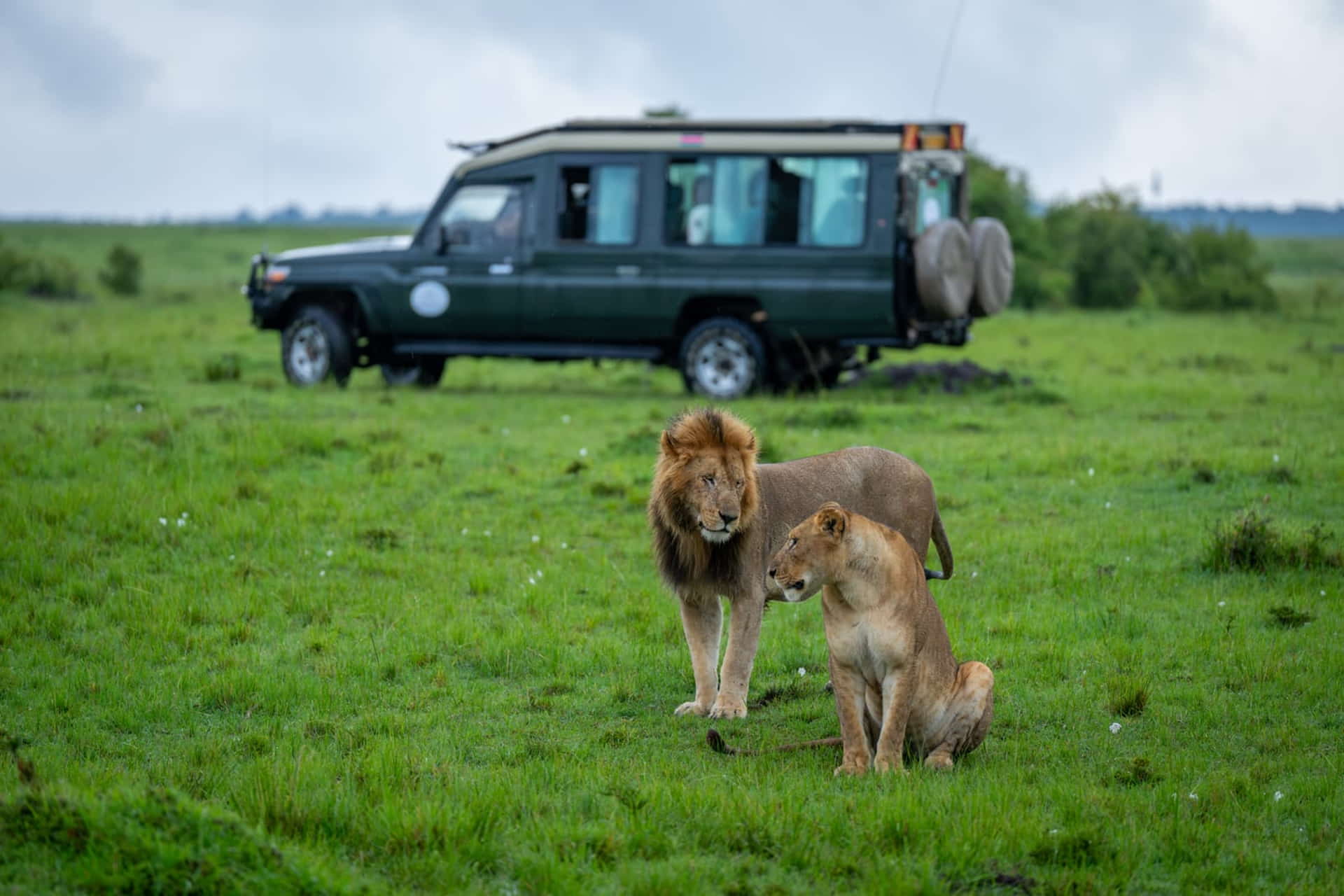
| – Seeing a pride of lions or a herd of elephants is a Jafrica safari highlight. To enable these encounters to continue to occur, the animals must be conserved and protected and the people that live near them must be supported.
– Protecting and restoring nature and biodiversity is fundamental to planetary health and human well-being. Intact ecosystems like forests, wetlands, and oceans act as vital carbon sinks, regulate our climate, and provide clean air and water. In some of the trips we do while visiting schools and donate some learning materials, we support tree planting initiative to facilitate regrow of the native trees like acacia of variable species. – Key strategies include establishing and effectively managing protected areas to conserve critical habitats for species. Beyond protection, active restoration is crucial: rewilding degraded landscapes, replanting native forests, and rehabilitating wetlands to rebuild ecological resilience. While on our wilderness trips, we ensure our guides adhere the best way practices on ensuring high respect on nature protection and caring of the delicate Ecosystem. – This effort also requires addressing direct threats. Curbing pollution from plastics, chemicals, and agricultural runoff prevents harm to land and aquatic life. Each of our guest is provided with aluminum made drinking water bottles (0.7litre), each vehicle travels with a 20-litre water reserve for water refiling of the little bottles whenever required by a Guest. – Sustainable practices must be integrated into human activities. Promoting regenerative agriculture that works with nature, instead of protecting soil health and reduces habitat loss. Ultimately, recognizing the intrinsic value of nature and aligning our economies to value natural capital is essential for securing a thriving future for all species. When the locals are involved directly to Tourism as the employees, their family and friends see the tangible benefits from having these areas protected as a direct result of the employment. We are originally from these remote areas where wildlife has been locally taken care from our traditional ways of life, it is against a Masai tradition to feed on any wild meat or carelessly handling of a plant of any kind. Being close to these communities (Both marginalized & Urban) we normally talk about values of having these fragile ecosystems protected since hey save greater benefits on our current and future well-being. |
| Providing local benefits from tourism, especially to the marginalized |
| – Gender balance in employment:
To some areas it is a bit challenging by nature but at the office we currently managing to have a gender balance. – Working in a close tie with stakeholders in conservation. Employing skilled and educated employees with good knowledge (Good education background) they would respect nature and do their level best on making the natural environment thrive. – Motivating education in schools especially in the remote areas: Every group live for a safari, there is a little support we do to education, like exercise books, pens, pencils to mention a few. Aiming on motivating education and as a result young children sees the value for having Tourism in the Country. – Enhance training to employees: Aiming to improve their skills & awareness toward environmental issues, in turn, they will improve the organization performance. – Examine & revise our environmental performance for continuous improvement. – Facilitating platforms for marginalized communities Encouraging them to share their cultural heritage, traditions, and stories in an authentic and respectful way that they control. This ensures cultural tourism becomes a source of pride and income, not exploitation, with protocols for culturally sensitive visitation. – We Go beyond low-skill, low-wage jobs. Invest in targeted training and capacity-building programs (in hospitality, guiding, management, language skills) to help marginalized individuals access higher-level, better-paying positions within tourism businesses, including leadership roles. |